Many organizations reach a point where hardware is still reliable, but the economics of manufacturer support no longer add up. Renewal prices increase, support terms become less flexible, and equipment that still meets operational needs is pushed toward replacement before the business is ready.
This is where third-party maintenance becomes relevant. In simple terms, it is hardware support delivered by an independent provider rather than the original manufacturer. Companies consider it when they want to reduce support costs, extend the useful life of existing infrastructure, and keep more control over upgrade timing instead of following an OEM-driven refresh cycle.
If you are evaluating when third-party maintenance makes sense, the short answer is this: it is usually a strong option when your equipment is stable, non-strategic, out of warranty, or part of a broader environment where flexibility matters more than buying new hardware. The more practical question is not whether OEM support is always better, but whether it still matches your operational and financial reality.
What third-party maintenance actually helps with
Third-party maintenance, often called TPM, is not simply a lower-cost version of manufacturer support. Its value is broader than price alone. For many IT teams, it provides a way to keep critical systems supported without committing to unnecessary capital spending.
In real-world environments, TPM is often used to:
- Extend the life of hardware that still performs well
- Reduce support spend on mature infrastructure
- Cover multiple hardware brands under one agreement
- Avoid forced upgrades tied to OEM lifecycle policies
- Support infrastructure during migration, consolidation, or decommissioning phases
- Maintain business continuity while long-term architecture decisions are still being made
This is why TPM is commonly seen in data centers, enterprise server estates, storage environments, and network infrastructure where stability matters more than having the newest platform.
When third-party maintenance makes the most sense
1. When OEM support costs increase after warranty ends
One of the most common triggers is the post-warranty renewal discussion. Hardware may be performing exactly as expected, but OEM support pricing often rises significantly after the initial term. At that point, the business is paying more for equipment that is older, even though its operational role may be straightforward and predictable.
For many organizations, this is the point where TPM becomes commercially sensible. Instead of accepting a higher support cost or replacing hardware too early, they look at alternatives that maintain service coverage while lowering operating expense.
This is especially relevant when systems have moved beyond standard warranty and into end-of-life support scenarios. If the manufacturer no longer covers the asset, that does not automatically mean the equipment has stopped being useful. In many cases, it simply means the OEM has moved on, while the customer still has a valid operational need.
2. When hardware is stable and no longer business-critical enough to refresh
Not every platform needs to be refreshed as soon as the manufacturer recommends it. Many systems support mature applications, internal services, archive workloads, or secondary production environments where performance is acceptable and change introduces unnecessary risk.
Third-party maintenance is well suited to this kind of infrastructure because it allows organizations to continue operating proven equipment without tying support decisions to new hardware sales. If a platform is stable, properly understood, and delivering what the business needs, extending its life can be the most practical option.
This approach often helps IT teams:
- Delay capital expenditure until it is strategically justified
- Get more return from past infrastructure investments
- Reduce disruption from avoidable migrations
- Keep focus on projects with clearer business value
3. When a company wants more flexibility than OEM contracts allow
OEM contracts are often structured around fixed terms, standard service packages, and support models designed to fit a broad customer base. That works in some cases, but not all. Organizations with changing infrastructure plans often need more flexibility than a standard manufacturer agreement provides.
TPM can be useful when you need:
- Shorter contract periods
- Customized SLAs based on actual risk
- Coverage for selected assets rather than full estates
- A practical support bridge during cloud migration or data center exit
- One support model across several vendors
In these cases, third-party maintenance functions as an OEM alternative that is aligned with current operational needs rather than predefined manufacturer rules. That does not mean OEM support is wrong. It means there are situations where an independent support model is simply a better fit.
4. When infrastructure includes multiple hardware vendors
Many enterprise environments are mixed by design. A single data center may include servers, storage, networking, and legacy appliances from several manufacturers, each with its own support process, contract structure, and renewal timeline.
Managing all of that through separate OEM relationships can be time-consuming and expensive. A third-party maintenance provider can simplify the model by offering one contract and one contact point across multiple platforms. That reduces administrative overhead and makes service coordination easier for internal teams.
This can be particularly valuable for organizations that want clearer support governance, more predictable costs, and less time spent managing fragmented vendor relationships.
Third-party maintenance for aging server infrastructure
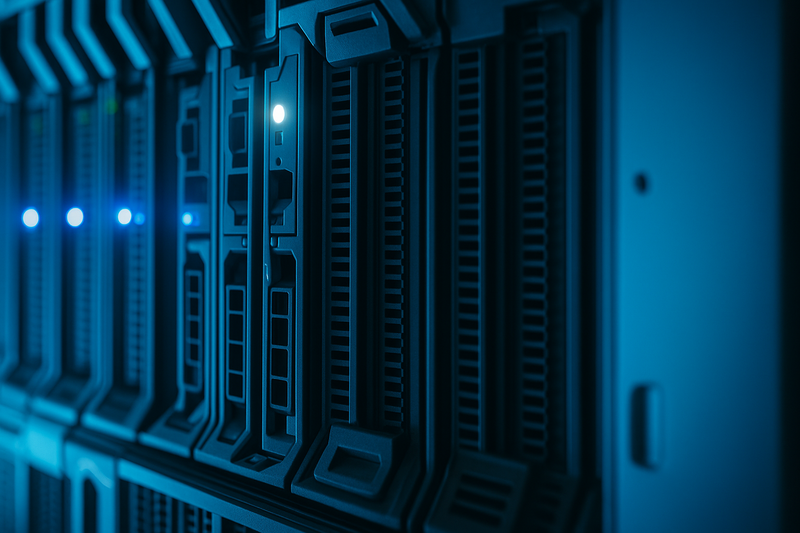
Server estates are one of the clearest use cases for TPM. Many organizations operate physical servers that continue to deliver dependable performance well after the OEM would prefer them to be replaced. If those servers support stable workloads, internal systems, edge environments, or legacy applications, early replacement may not be necessary.
In these scenarios, independent server support can help maintain uptime without forcing a hardware refresh that the business does not need yet. This is particularly relevant for:
The key question is whether the server platform remains fit for purpose. If it does, support should be evaluated on operational value, not only on the OEM lifecycle date.
Third-party maintenance for legacy storage systems
Storage decisions are often more sensitive than server decisions because they directly affect data availability, business continuity, and application reliability. That said, many legacy storage systems remain stable, well understood, and entirely capable of supporting their assigned workloads.
When a storage array reaches the end of the manufacturer support period, organizations often face a difficult choice: renew at a higher cost, replace early, or find a practical way to continue supporting the platform. This is where independent storage support can make sense, especially for mature environments where capacity and performance are still sufficient.
- Archive and retention platforms
- Secondary or backup storage environments
- Legacy application storage tied to older systems
- Arrays supporting workloads scheduled for future migration
- Business-critical systems where change risk is higher than the benefit of immediate replacement
In these cases, TPM is not about delaying the inevitable without a plan. It is about creating a controlled extension period that protects service continuity while giving the organization time to make better long-term decisions.
When third-party maintenance may be the wrong fit
Third-party maintenance is useful in many situations, but not all. A balanced lifecycle strategy should acknowledge where OEM support may still be the better choice.
- The hardware runs highly strategic, fast-changing workloads that require the latest platform capabilities
- You depend on OEM software support that is tightly linked to active manufacturer contracts
- The environment has unique compliance requirements that specifically mandate OEM involvement
- The business has already committed to near-term replacement and only needs minimal interim coverage
- The support provider cannot demonstrate strong parts access, process maturity, or relevant experience
In other words, there is no universal rule. The right decision depends on risk, timeline, workload criticality, and the role the equipment still plays in your environment.
How to evaluate whether TPM is the sensible option
If you are assessing third-party maintenance, a practical review usually starts with a few straightforward questions:
- Is the hardware still performing reliably?
- Does it continue to meet business and technical requirements?
- Would replacing it now create cost or disruption without clear benefit?
- Are OEM renewal terms disproportionate to the asset's remaining value?
- Do you need support flexibility during a transition period?
- Would multi-vendor coverage simplify your support model?
If the answer to several of these is yes, TPM is worth serious consideration. For many organizations, it creates room to make better-timed refresh decisions, protect operational continuity, and manage budgets more effectively.
Third-party maintenance is often a timing decision
In practice, the decision is rarely about support alone. It is about timing. When infrastructure is still useful, replacing it because a support policy changed is not always the best business decision. TPM gives organizations another option: continue supporting what works, reduce unnecessary spend, and upgrade on a timetable that matches actual need.
That makes third-party maintenance especially relevant for post-warranty systems, mixed-vendor estates, aging server infrastructure, and legacy storage platforms where stability and cost control matter. Used in the right context, it is not a compromise. It is a practical lifecycle strategy.
For IT teams trying to balance uptime, budget discipline, and long-term planning, that is usually the real reason third-party maintenance makes sense.